 Musei nazionali di Perugia – Direzione regionale Musei nazionali Umbria
I Cai Carcu/The Cai Carcu
I Cai Carcu
L’amore “eterno” di Vel e Thana
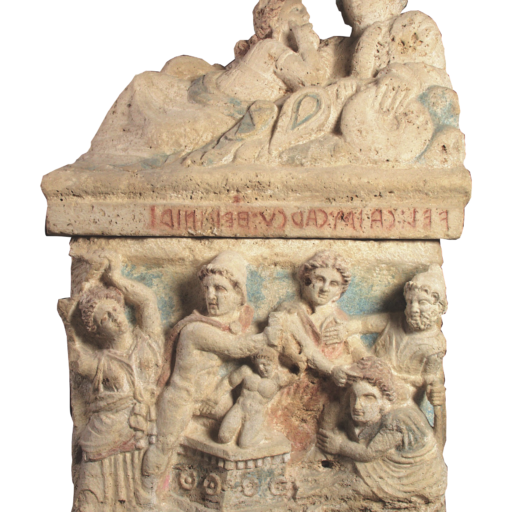
Le urne dell’ipogeo dei Cai Carcu (II-I sec. a.C.), scoperto nel 1963 in località Ponticello di Campo, solo in parte esposte, sono presentate secondo l’ordine in cui furono rinvenute, noto da alcune foto scattate al momento dello scavo. Il fondatore del sepolcro, al centro della banchina di fondo, è Vel Cai Carcu marito di Thana Caia Prucui, da cui ha quattro figli e quattro nipoti, sepolti nella tomba di famiglia. Vel è figlio di Larth, che non è presente nel sepolcro, e di Thana Herini. Nella tomba, oltre alla madre, sono anche la sorella di Vel, due fratelli e il figlio di uno di questi. Sulla cassa dell’urna di Vel è scolpito Telefo che prende in ostaggio e minaccia il piccolo Oreste, figlio di Agamennone, per richiamare l’attenzione di Achille che lo ha ferito e che è anche il solo, secondo il mito, che può guarirlo. Una minaccia, paura della malattia o della morte, una giovane vittima, sono alcuni dei possibili significati di questo racconto mitologico, noto a Greci ed Etruschi, che si conclude con la guarigione di Telefo. Sul coperchio, Vel è insieme alla consorte, come documentato in altri casi a Perugia, Chiusi, Arezzo e Volterra: la donna è protesa verso il coniuge che le cinge le spalle e tiene in mano una patera (piatto fondo). Lei porta una mano al mento e nell’altra ha un ventaglio foliato che conserva l’intensa colorazione azzurra nella nervatura centrale. I reperti ossei documentano che Vel visse fino a quaranta/cinquanta anni. Thana Caia Prucui, deposta in un’altra urna, vicino al marito, appartiene alla famiglia dei Cai Prucu, non altrimenti nota a Perugia, ma documentata nel Chiusino come Pruciu. L’iscrizione indica eccezionalmente l’età di morte, 91 anni, confermata anche dai resti ossei conservati. Forse dunque una donna di Chiusi unì le proprie ricchezze ai perugini Cai Carcu e visse ancora a lungo dopo la morte del marito, tenendo con fermezza le sorti della famiglia, unita intorno a lei in vita e poi riunita nella camera funeraria. Il legame profondo tra i due coniugi, che la donna onorò, non risposandosi, è giunto a noi intatto nel tempo, eternato nel tenero abbraccio scolpito sull’urna.
Immagini:
Tomba dei Cai Carcu (II-I sec. a.C.)
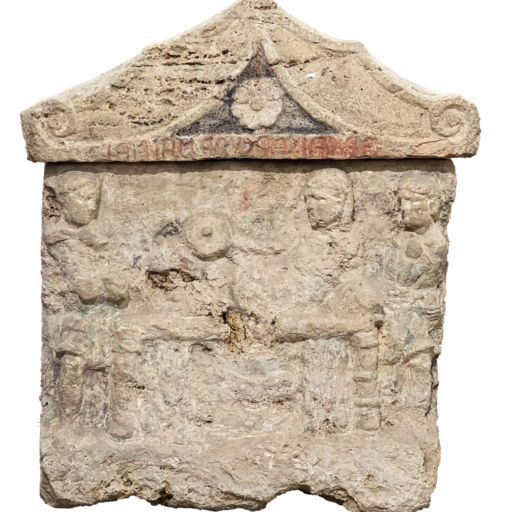
- Urna di Arnth Cai Carcu figlio di Arnth e di una Sulla cassa: scena di banchetto.
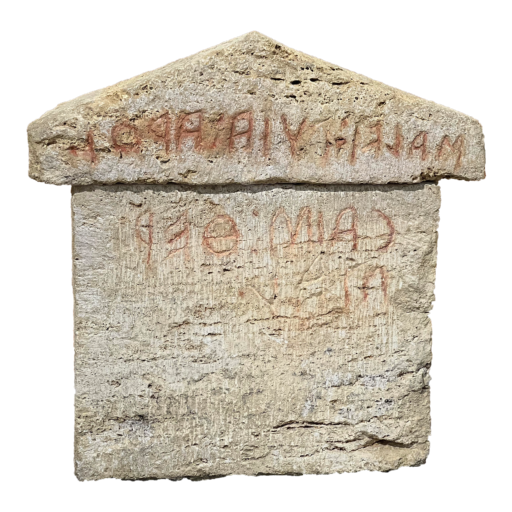
- Urna di Salvi, moglie di Arnth Cai figlio di una Herinia. Cassa non decorata.
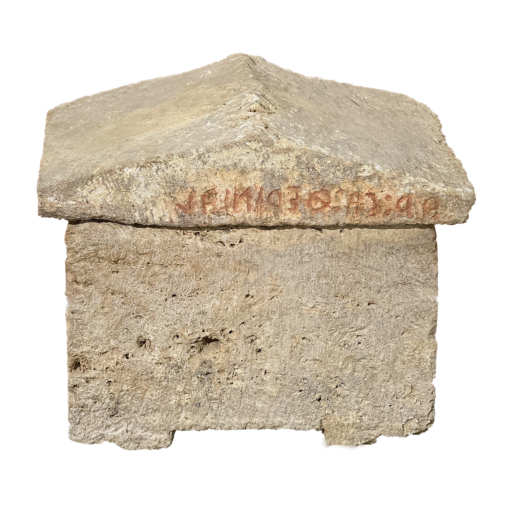
- Urna di Arnth Cai Carcu figlio di una Herinia. Cassa non decorata.
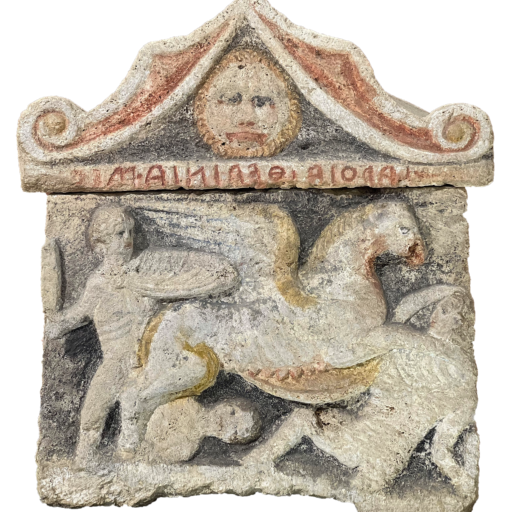
- Urna di Larthia figlia di una Herinia. Sulla cassa: lotta tra guerrieri (Arimaspi) e grifonessa.
- Urna di Vel Cai Carcu figlio di una Herinia. Sulla cassa: Oreste e Telefo.
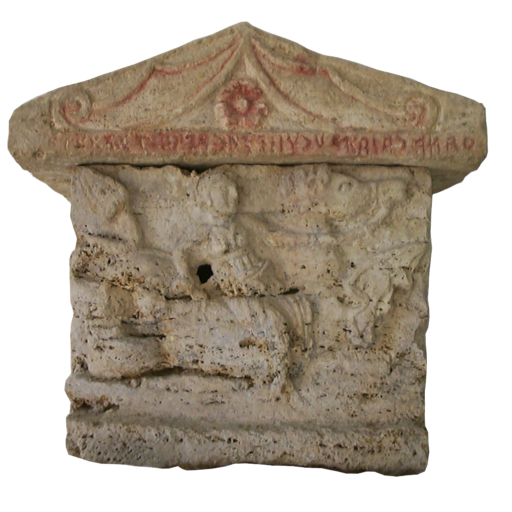
- Urna di Thana Caia Prucui moglie di Vel vissuta fino a 91 anni. Sulla cassa: figura femminile su mostro marino.
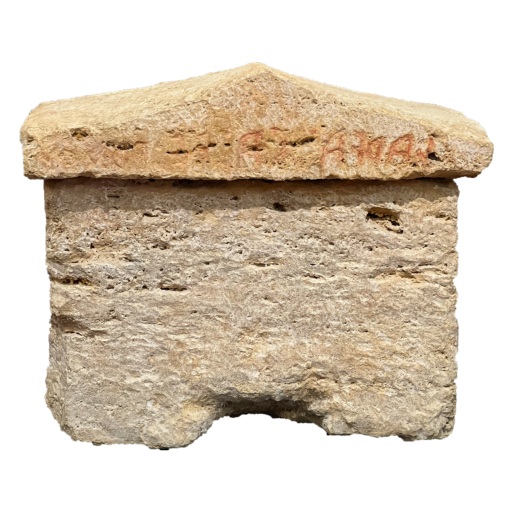
- Urna di Larza (il piccolo Larth) Cai Carcu figlio di Vel e di una Prucui. Cassa non decorata.
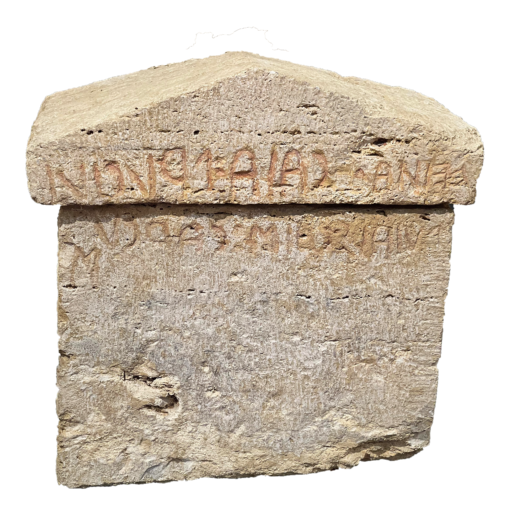
- Urna di Veilia Caia Pruciui, moglie di Laris Cai Carcu. Cassa non decorata.
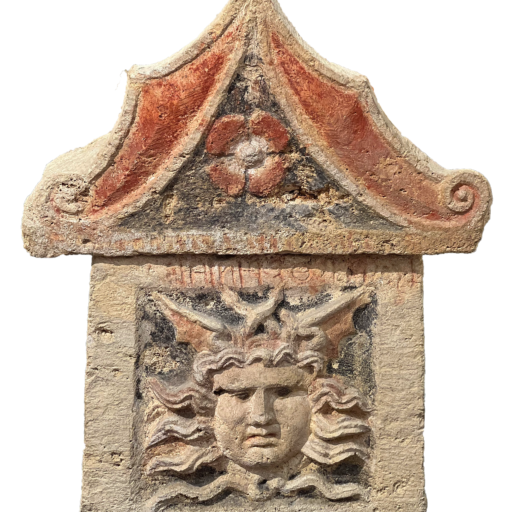
- Urna di Laris Cai Carcu figlio di una Herinia. Sulla cassa: testa della gorgone Medusa.
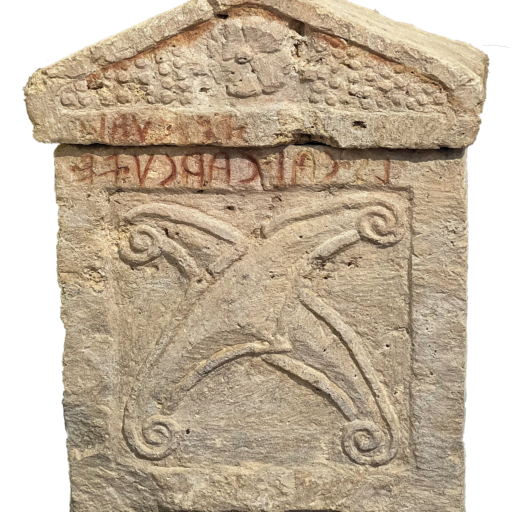
- Urna di Laris Cai Carcu figlio di Vel e di una Prucui. Sulla cassa: pelte (scudi semilunati) incrociate.
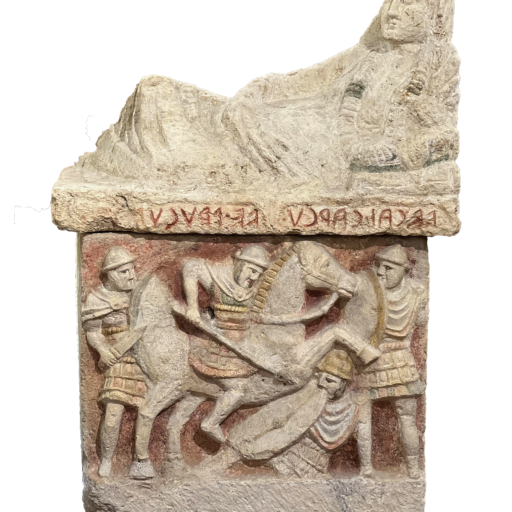
- Urna di Vel Cai Carcu figlio di Vel e di una Prucui. Sulla cassa: scena di battaglia.
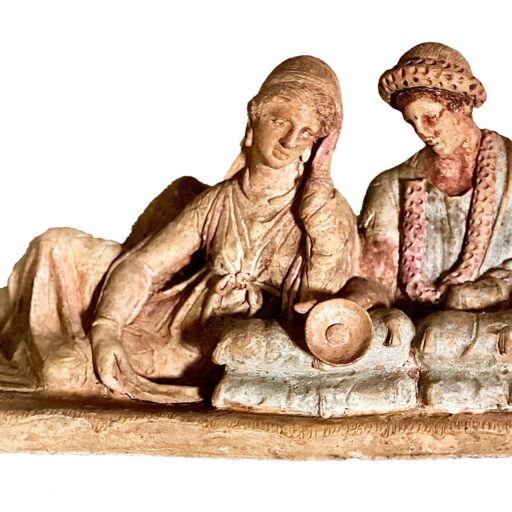
- Coperchio di urna in terracotta policroma con coppia di sposi.
The Cai Carcu
The ‘eternal’ love of Vel and Thana
The urns from the tomb of the Cai Carcu family (2nd-1st century BC), only some of which are on display, were discovered in 1963 at Ponticello di Campo. They are presented in the order in which they were found, as documented by photographs taken during the excavations. At the centre of the rear burial bench is the founder of the tomb, Vel Cai Carcu, husband of Thana Caia Prucui. They had four children and four grandchildren who are all buried in the family tomb. Vel was the son of Larth, who is not present in the tomb, and of Thana Herini. Besides his mother, the tomb also contains Vel’s sister, two brothers and the son of one of them. The chest of Vel’s urn is carved with a scene depicting Telephus taking the young Orestes, son of Agamemnon, hostage and threatening him in order to attract the attention of Achilles, who had wounded him and who was, according to myth, the only person who could heal him. A threat, the fear of illness or death, and a young victim: these are among the possible meanings of this mythological story, known to both Greeks and Etruscans, which ends with Telephus being healed. On the lid, Vel is depicted together with his wife, as attested in other cases at Perugia, Chiusi, Arezzo and Volterra. The woman leans towards her husband, who puts his arm around her shoulders and holds a patera (shallow libation bowl). She raises one hand to her chin, while in the other she holds a leaf-shaped fan whose central rib still preserves its intense blue colouring. The skeletal remains indicate that Vel lived to the age of forty or fifty years old. Thana Caia Prucui, placed in another urn beside her husband, belonged to the Cai Prucu family, otherwise unknown at Perugia but documented in the Chiusi area as Pruciu. Very unusually, the inscription records her age at death – 91 years old – which has also been confirmed by her surviving skeletal remains. A woman from Chiusi may have brought her wealth into the Perugian Cai Carcu family and lived on long after her husband’s death, firmly holding the family together around her during her lifetime, before they were reunited in the burial chamber. The profound bond between the two spouses, which she honoured by never remarrying, has survived intact through the centuries, immortalised in the tender embrace carved on the urn.
Immages:
- Urn of Arnth Cai Carcu, son of Arnth and of a woman of the Salvi On the chest: banquet.
- Urn of Salvi, wife of Arnth Cai Carcu and of a woman of the Herini Undecorated chest.
- Urn of Arnth Cai Carcu, son of a woman of the Herini Undecorated chest.
- Urn of Larthia, daughter of a woman of the Herini On the chest: battle between warriors (Arimaspi) and a female griffin.
- Vel Cai Carcu son of a woman of the Herini On the chest: Orestes and Telephus.
- Urn of Thana Caia Prucui, wife of Vel. She lived 91 years old. On the chest: female figure on a sea monster.
- Urn of the little Larth Cai Carcu son of Vel and of a woman of the Prucu Undecorated chest.
- Urn of Veilia Caia Pruciui, wife of Laris Cai Carcu. Undecorated chest.
- Urn of Laris Cai Carcu, son of a woman of the Herini On the chest: head of the gorgon Medusa.
- Urn of Laris Cai Carcu, son of Vel and of a woman of the Prucu On the chest: crossed peltae (crescent-shaped shields).
- Urn of Vel Cai Carcu, son of Vel and of a woman of the Prucu On the chest: battle.
- Polychrome terracotta urn lid depicting a married couple.
Galleria fotografica (scorri)
22 October 2026
1. Urna di Arnth Cai Carcu figlio di Arnth e di una Salvi. Sulla cassa: scena di banchetto.
22 October 2026
2. Urna di Salvi, moglie di Arnth Cai figlio di una Herinia. Cassa non decorata.
22 October 2026
3. Urna di Arnth Cai Carcu figlio di una Herinia. Cassa non decorata.
22 October 2026
4. Urna di Larthia figlia di una Herinia. Sulla cassa: lotta tra guerrieri (Arimaspi) e grifonessa.
22 October 2026
5. Urna di Vel Cai Carcu figlio di una Herinia. Sulla cassa: Oreste e Telefo.
22 October 2026
6. Urna di Thana Caia Prucui moglie di Vel vissuta fino a 91 anni. Sulla cassa: figura femminile su mostro marino.
22 October 2026
7. Urna di Larza (il piccolo Larth) Cai Carcu figlio di Vel e di una Prucui. Cassa non decorata.
22 October 2026
8. Urna di Veilia Caia Pruciui, moglie di Laris Cai Carcu. Cassa non decorata.
22 October 2026
9. Urna di Laris Cai Carcu figlio di una Herinia. Sulla cassa: testa della gorgone Medusa.
22 October 2026
10. Urna di Laris Cai Carcu figlio di Vel e di una Prucui. Sulla cassa: pelte (scudi semilunati) incrociate.
22 October 2026
11. Urna di Vel Cai Carcu figlio di Vel e di una Prucui. Sulla cassa: scena di battaglia.
22 October 2026
12. Coperchio di urna in terracotta policroma con coppia di sposi.
Ultimo aggiornamento
23 Ottobre 2026, 09:40